
Oak has long been a favorite choice for furniture, flooring, and cabinetry thanks to its strength and classic beauty.
When it comes to red oak vs white oak, many people wonder which is better for their home. Both types share beauty and lasting durability, but they differ in color, grain, and hardness.
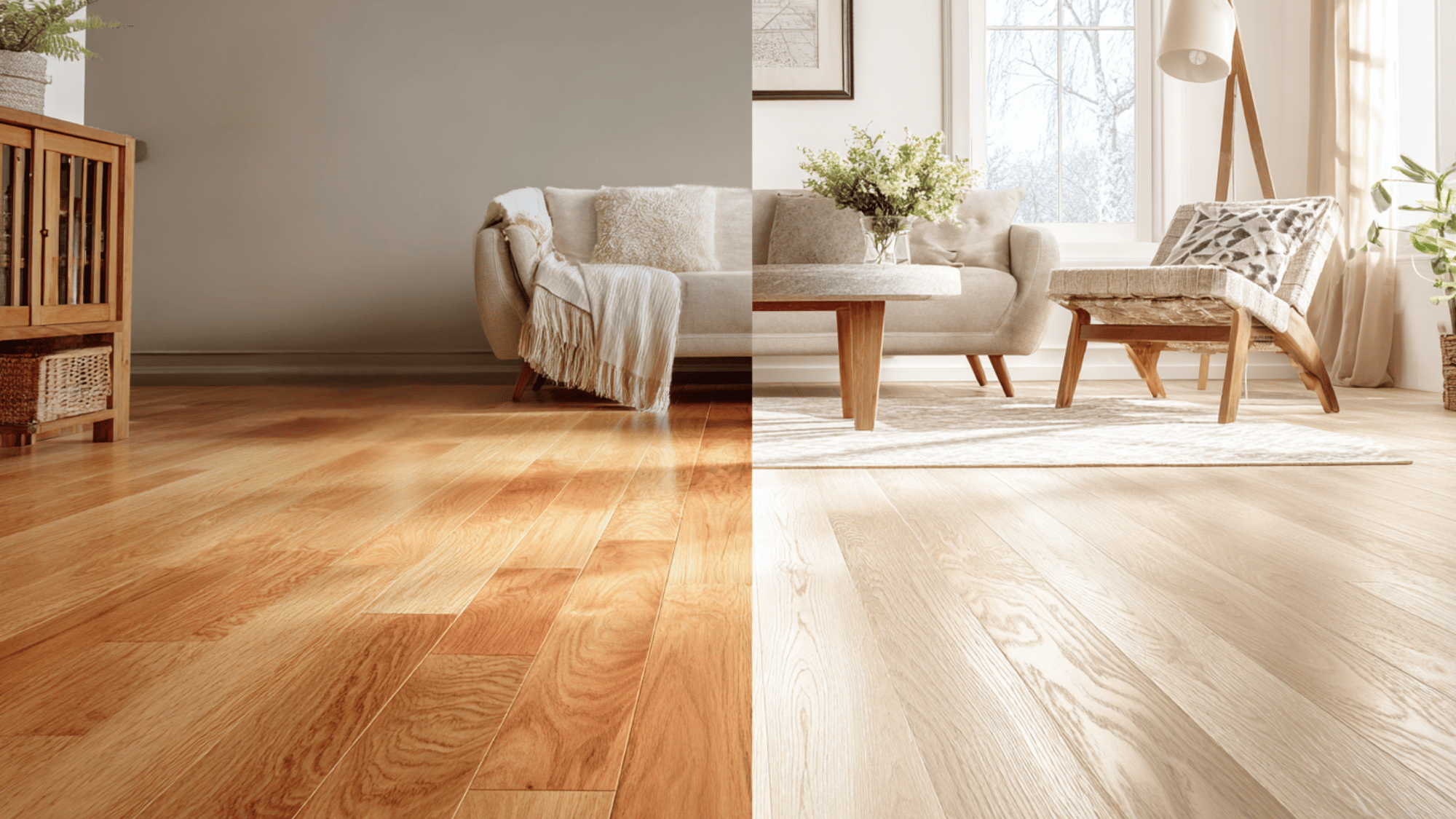
Red oak offers a warm, reddish tone with bold grain patterns, while white oak leans toward a golden hue with a smoother texture.
This blog helps readers understand the key differences so they can confidently choose the type of oak that best fits their space and style.
Difference Between Red Oak and White Oak
Both red oak and white oak belong to the same oak family, but each has a unique character that sets it apart.
To make things simple, think of red oak as bold and warm, while white oak feels calm and refined.
Red oak usually has a reddish tone with a strong, open grain, making it perfect for traditional or rustic designs.
White oak, on the other hand, has a smoother, tighter grain and a light brown shade that suits modern spaces beautifully.
In terms of strength, white oak is slightly harder and more moisture-resistant. Red oak is easier to work with and more affordable, making it a favorite for furniture, stairs, and indoor flooring.
What Kinds of Wood are in the Red and White Oak Group?
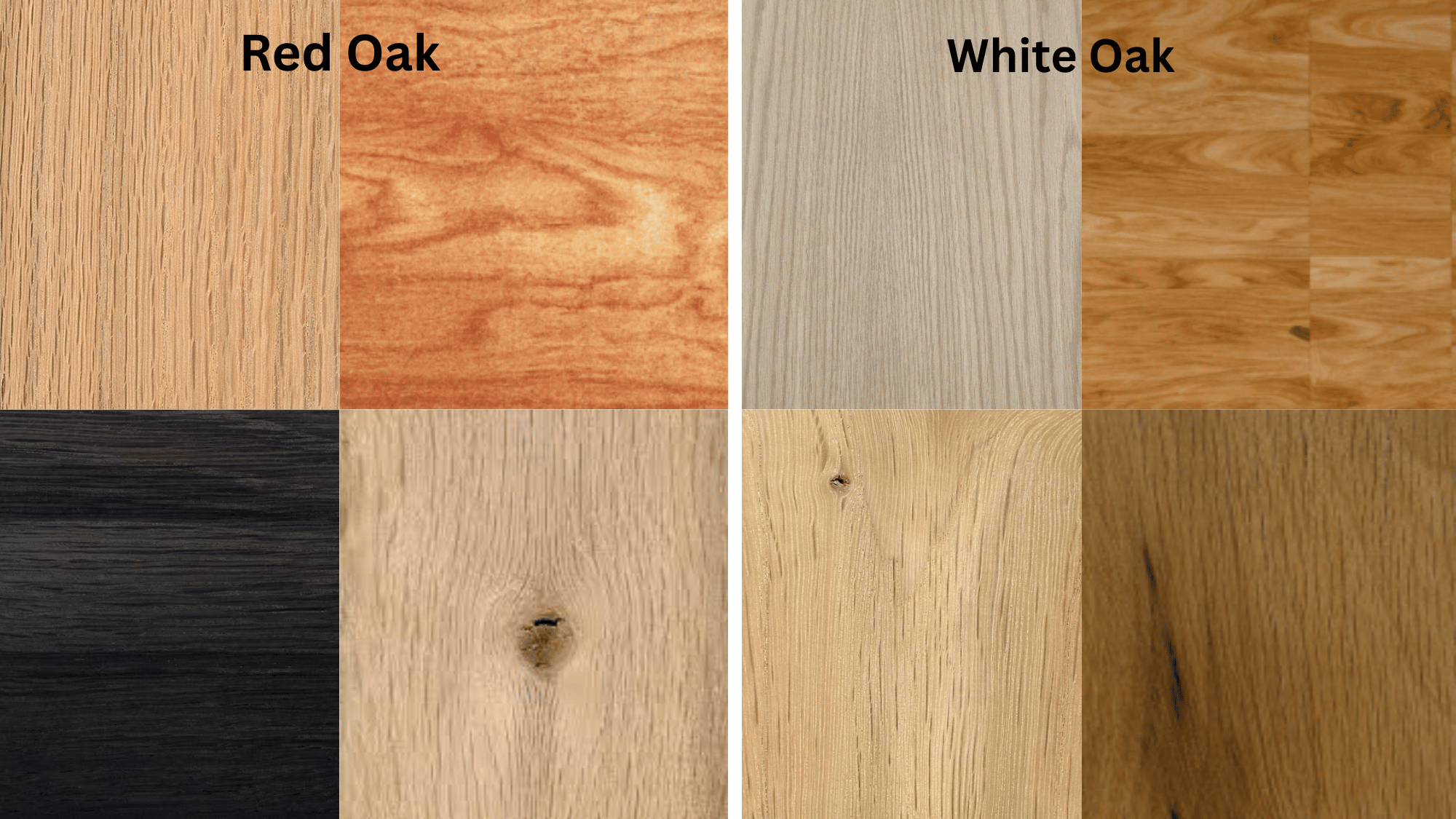
The red oak group includes species like red oak, scarlet oak, black oak, and pin oak. These trees have pointed leaf lobes, and their acorns take two years to mature.
Their sapwood is light to medium brown, while the heartwood shows pinkish to reddish tones with a coarse, open grain.
In contrast, the white oak group, including white oak, bur oak, swamp white oak, and live oak, has rounded leaf lobes and acorns that mature in one season.
White oak’s sapwood is pale, and its heartwood ranges from light to dark brown. With a tighter, smoother grain, white oak is naturally water-resistant and ideal for outdoor applications such as decks, barrels, and furniture.
Comparing Characteristics of Red Oak vs White Oak
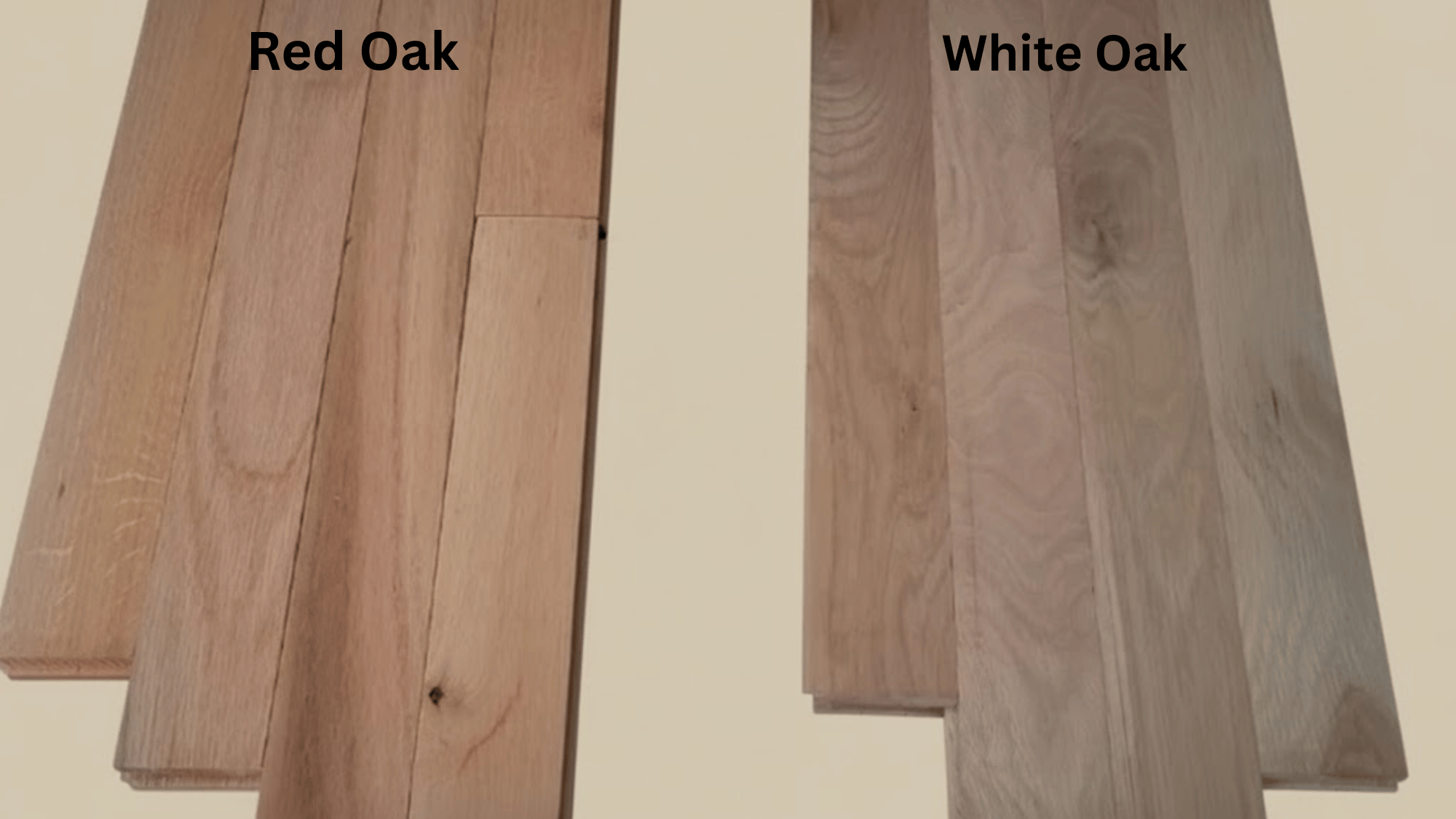
Both red oak and white oak are strong, beautiful hardwoods, but their color, grain, and durability set them apart.
Color and Appearance
When comparing red oak vs white oak, color is the first thing people notice.
Red oak has a pinkish or reddish undertone that brings warmth to a space, while white oak shows golden to light brown hues with cooler undertones.
White oak also absorbs stain more evenly, giving a smoother, more consistent finish. These color differences make red oak ideal for cozy designs and white oak perfect for clean, modern styles.
Grain Pattern and Texture
Red oak features a bold, open grain with a lively texture that adds visual movement to any room.
White oak, on the other hand, has a tighter, straighter grain that gives it a more uniform and refined look.
The grain difference makes red oak great for rustic or traditional interiors, while white oak fits well in sleek, contemporary designs.
Hardness and Durability
Both woods are strong, but white oak is slightly harder on the Janka scale, making it more resistant to dents and water.
Red oak is a bit softer and easier to cut and shape, making it ideal for furniture or projects that require detailed craftsmanship.
White oak’s extra durability makes it a better choice for flooring, stairs, and high-traffic areas.
Resistance to Water and Decay
When it comes to moisture, white oak stands out for its natural water resistance.
Its closed-grain structure prevents water from easily seeping in, which is why it’s commonly used for barrels, boats, and outdoor furniture.
Red oak has open pores that allow moisture to penetrate, making it less suitable for damp areas. For long-lasting performance, white oak is the better choice for kitchens, entryways, and high-moisture areas.
Cost, Availability, and Best Uses of Both the Woods
Red oak and white oak are widely available across North America, making them reliable choices for furniture, flooring, and cabinetry.
Red oak tends to be more affordable since it’s more abundant and easier to source, making it ideal for budget-friendly projects like interior trim, stairs, and traditional furniture.
White oak, though slightly more expensive, offers superior strength and moisture resistance, making it ideal for flooring, modern cabinetry, and even outdoor applications.
In interior design, red oak’s warm tones complement rustic or classic styles, while white oak’s smooth, neutral grain fits contemporary and minimalist spaces.
Eco-Friendly Qualities of Red Oak and White Oak
Red oak and white oak are environmentally friendly choices when harvested responsibly, supporting sustainable forestry and reducing environmental impact.
- Sustainable Harvesting: When sourced from managed forests, both oaks promote forest regeneration and maintain healthy ecosystems.
- FSC Certification: Choosing FSC-certified oak ensures the wood comes from forests that meet strict environmental and social responsibility standards.
- Domestic Availability: Grown widely across North America, using local oak reduces transportation emissions and supports regional economies.
- Longevity: Oak’s durability means products last for decades, reducing waste and the need for frequent replacements.
- Recyclability: Oak furniture and flooring can be refinished or repurposed, extending their life and minimizing landfill waste.
How to Choose Between Red Oak and White Oak
Choosing between red oak and white oak depends on your style, budget, and where you plan to use the wood.
Pick red oak if you prefer warm tones and a traditional or rustic look. It’s also easier on the budget. And choose white oak if you value strength and a sleek, modern appearance, especially for high-traffic or moisture-prone areas like kitchens and entryways.
For a balanced design, many homeowners combine both using red oak for furniture or trim and white oak for flooring or cabinets.
This mix creates visual interest while maintaining harmony throughout the home, blending warmth and durability in a classic way.
Conclusion
Understanding the difference between red oak vs white oak helps homeowners and designers make smart, lasting choices.
Both types of oak offer natural beauty, strength, and versatility, but they suit different needs and styles.
Red oak brings warmth and character with its rich tone, while white oak delivers modern appeal and excellent durability.
The best choice depends on the desired look, performance, and budget. With either option, oak remains a hardwood that adds value, comfort, and a classic, stylish touch to any home.