Planning a bathroom renovation and thinking about actual expenses?
Understanding bathroom remodel cost estimator tools empowers you to set realistic budgets and make informed decisions throughout your project.
The tool analyzes multiple factors simultaneously by fixture selections, providing customized projections rather than generic national averages that rarely match reality.
Armed with accurate estimates, you will negotiate better, avoid common pitfalls, and create the bathroom you envision without budget surprises.
Importance of Estimating the Cost Before Remodeling
Accurate cost estimation prevents mid-project financial stress when unexpected demolition expenses arise.
Understanding your true budget upfront helps you prioritize must-have features over nice-to-have luxuries, ensuring you invest wisely in the elements that matter most.
Professional estimates reveal hidden costs like permit fees, disposal charges, and temporary bathroom solutions that many homeowners overlook.
Starting with clear financial parameters lets you compare contractor bids effectively, negotiate better rates, and maintain control throughout the renovation process.
Proper planning changes potentially stressful projects into manageable, rewarding home improvements that enhance your space without regret.
Comparison of Different Kinds of Bathroom Remodeling
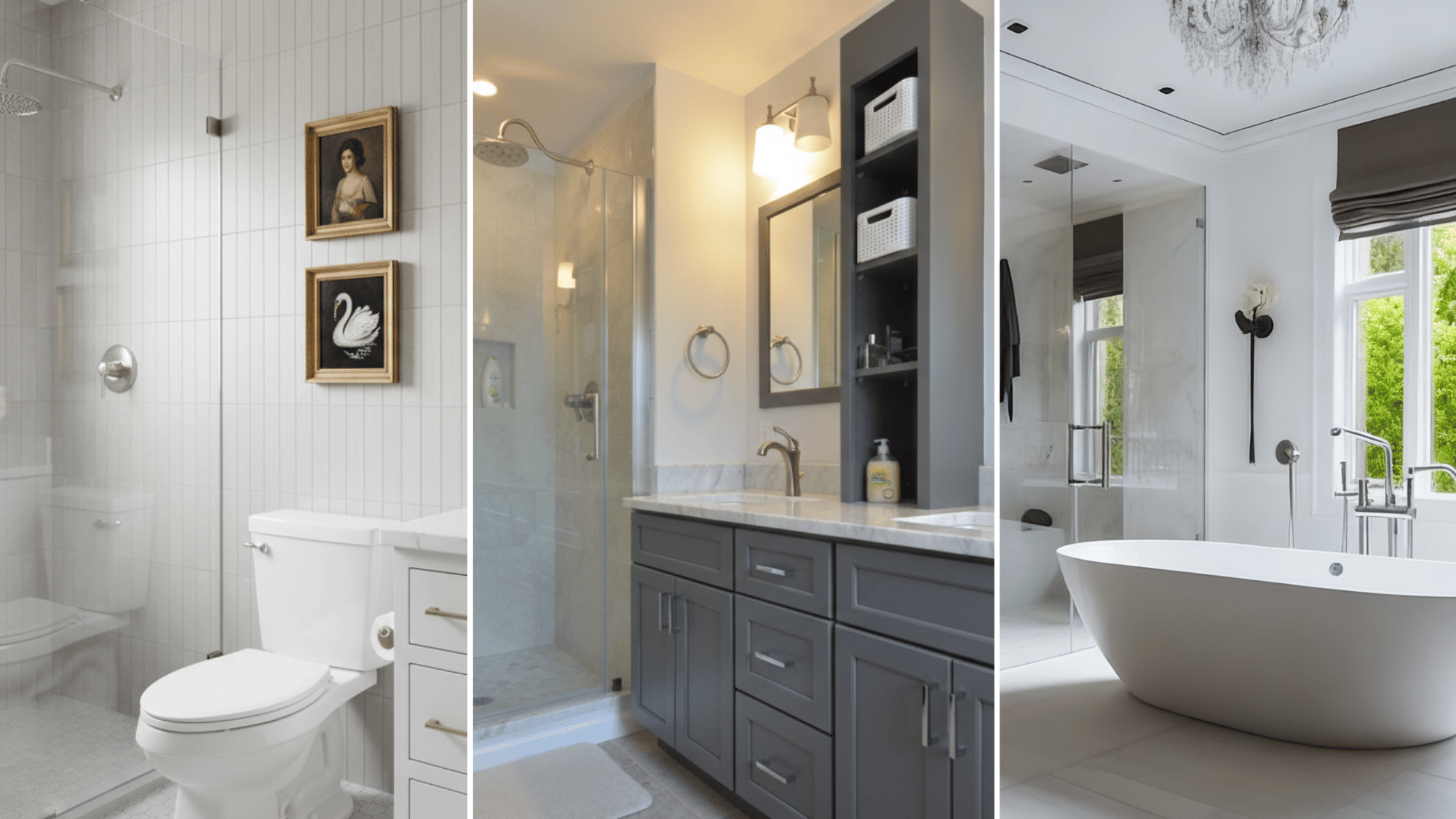
Find out various bathroom remodeling approaches, from budget-friendly updates to luxury renovations, helping you choose the perfect changes for your space and budget.
| Feature | Low-End | Mid-End | Luxury |
|---|---|---|---|
| Budget Range | Around $2K–$7K | Around $8K–$20K | Around $25K+ |
| Materials | Ceramic, vinyl | Porcelain, granite | Marble, quartzite |
| Vanity | Prefab | Semi-custom | Custom |
| Fixtures | Basic chrome | Designer finishes | Premium brands |
| Lighting | Basic | Layered | Smart + ambient |
| Design | Simple | Modern | Spa-inspired |
| Storage | Minimal | Built-in | Hidden & stylish |
Cost Breakdown by Major Components
Understanding how remodeling expenses are divided among fixtures, materials, and finishes helps you allocate your budget strategically and make informed decisions.
1. Wall Tiles, Paint, or Wallpaper
Wall finishes significantly impact bathroom style and budget. Tiles range $2-$15 per square foot, with installation adding $5-$10 per square foot.
Ceramic and subway tiles offer affordability, while natural stone increases costs. Alternatively, moisture-resistant paint costs $25-$50 per gallon.
Wallpaper ranges $30-$200 per roll, with professional installation adding $1-$3 per square foot. Quality waterproofing surface preparation ensures long-lasting finishes.
2. Floor Tiles
Floor tiles cost $3-$20 per square foot, depending on quality and design complexity. Porcelain and ceramic dominate bathroom flooring due to water resistance and durability.
Installation labor adds $4-$12 per square foot based on pattern difficulty. Larger format tiles reduce grout lines and installation time, potentially lowering overall costs.
Textured or matte finishes provide slip resistance, improving safety in wet environments.
3. Fixtures
Bathroom fixtures, including faucets, showerheads, and towel bars, range from $200-$3,000 total, depending on finish quality.
Chrome and brushed nickel offer affordability, while oil-rubbed bronze and matte black command premium prices.
High-efficiency fixtures reduce water consumption, lowering utility bills long-term. Matching finishes throughout creates a cohesive design, but limits mixing budget and premium pieces.
4. Countertops
Countertop ranges from $20 to $200 per square foot installed. Laminate offers budget-friendly options at $20-$50, while quartz provides durability at $50-$100.
Granite and marble deliver luxury at $75-$200 per square foot. Smaller bathroom vanities require fewer elements, making premium surfaces more affordable than kitchen installations.
Edge profiles and backsplashes add to the cost. Non-porous things like quartz resist staining and require minimal maintenance compared to natural stone.
5. Faucets and Plumbing
Faucets range from $50-$800, depending on brand, finish, and features like touchless operation. Basic chrome models start under $100, while designer finishes exceed $500.
Behind-wall plumbing work adds $200-$1,000 if relocating fixtures. Upgrading supply lines, shut-off valves, and drain assemblies adds $100-$300.
Professional installation ensures proper function and prevents leaks. Single-handle faucets offer convenience, while widespread designs provide easier maintenance access.
6. Cabinets
Bathroom cabinets range from $200-$5,000, depending on construction quality and customization level. Stock vanities offer affordability at $200-$1,000.
Custom cabinetry exceeds $3,000 with unlimited design possibilities. Solid wood construction outlasts particle board alternatives.
Moisture-resistant finishes and proper sealing protect cabinets from humidity damage in bathroom environments.
7. Toilet
Toilets range from $100-$2,500, depending on style, efficiency, and features. Standard two-piece models start at $100-$300, while one-piece designs cost $200-$600.
Comfort-height toilets add $50-$100 for accessibility benefits. Smart toilets with bidet functions, heated seats, and automatic lids exceed $1,000.
Water-efficient models reduce utility bills while meeting standards. WaterSense-certified toilets use 20% less water than standard models without compromising performance.
8. Lighting
Lighting fixtures cost $50-$1,000 per fixture, depending on style and quality. Vanity lights range $75-$400, while decorative chandeliers exceed $500.
Recessed lighting installation costs $100-$200 per fixture, including labor. LED fixtures offer energy efficiency and longer lifespans.
Layering ambient, task, and accent lighting creates depth while accommodating different activities and moods.
9. Shower Door Type
Shower doors range from $200-$2,000, depending on style and glass quality. Framed doors offer affordability, while semi-frameless doors cost high.
Frameless glass doors create a luxury appeal at $1,000-$2,000 installed. Sliding doors work in tight spaces, while hinged doors require clearance.
Thicker glass provides durability and a premium appearance. Treated glass coatings resist water spots and soap scum, reducing cleaning time and maintaining clarity longer.
Bathroom Remodel Cost by Size
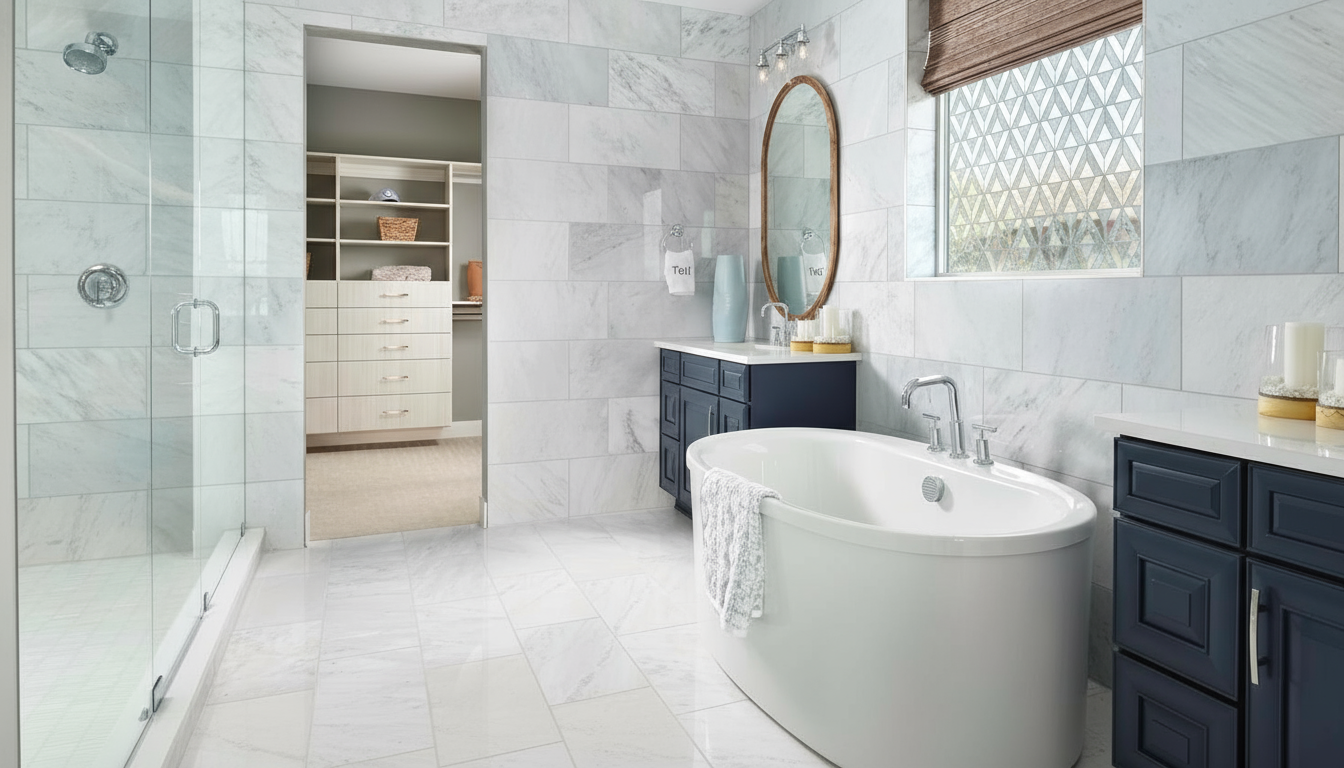
Bathroom dimensions significantly impact renovation expenses, with powder rooms requiring less investment than spacious primary suites, which need extensive things and labor.
| Bathroom Size | Square Footage | Average Cost Range |
|---|---|---|
| Small (Half Bath) | 15-40 sq ft | Around $5,000 – $15,000 |
| Medium (Full Bath) | 50-100 sq ft | Around $15,000 – $25,000 |
| Large (Master Bath) | 100-150 sq ft | Around $25,000 – $35,000 |
| Luxury (Master Suite) | 150+ sq ft | Around $35,000 – $75,000+ |
Regional Price Differences
Bathroom remodeling costs vary significantly depending on your geographic location due to differences in labor rates, material availability, and local building codes.
Major metropolitan areas like New York, San Francisco, and Los Angeles charge 30% to 50% more than smaller cities or rural regions. Coastal regions generally see higher costs compared to the Midwest and Southern states, where labor costs are high.
Local permit fees range from $50 in small towns to several hundred in larger cities. Shipping costs increase in remote areas with limited supplier access.
Climate considerations affect costs too, with regions requiring specific ventilation, heating, or moisture-resistant materials.
Using a bathroom remodel cost estimator that accounts for your zip code provides more accurate projections than national averages alone.
Cost-Saving Tips for Bathroom Remodels
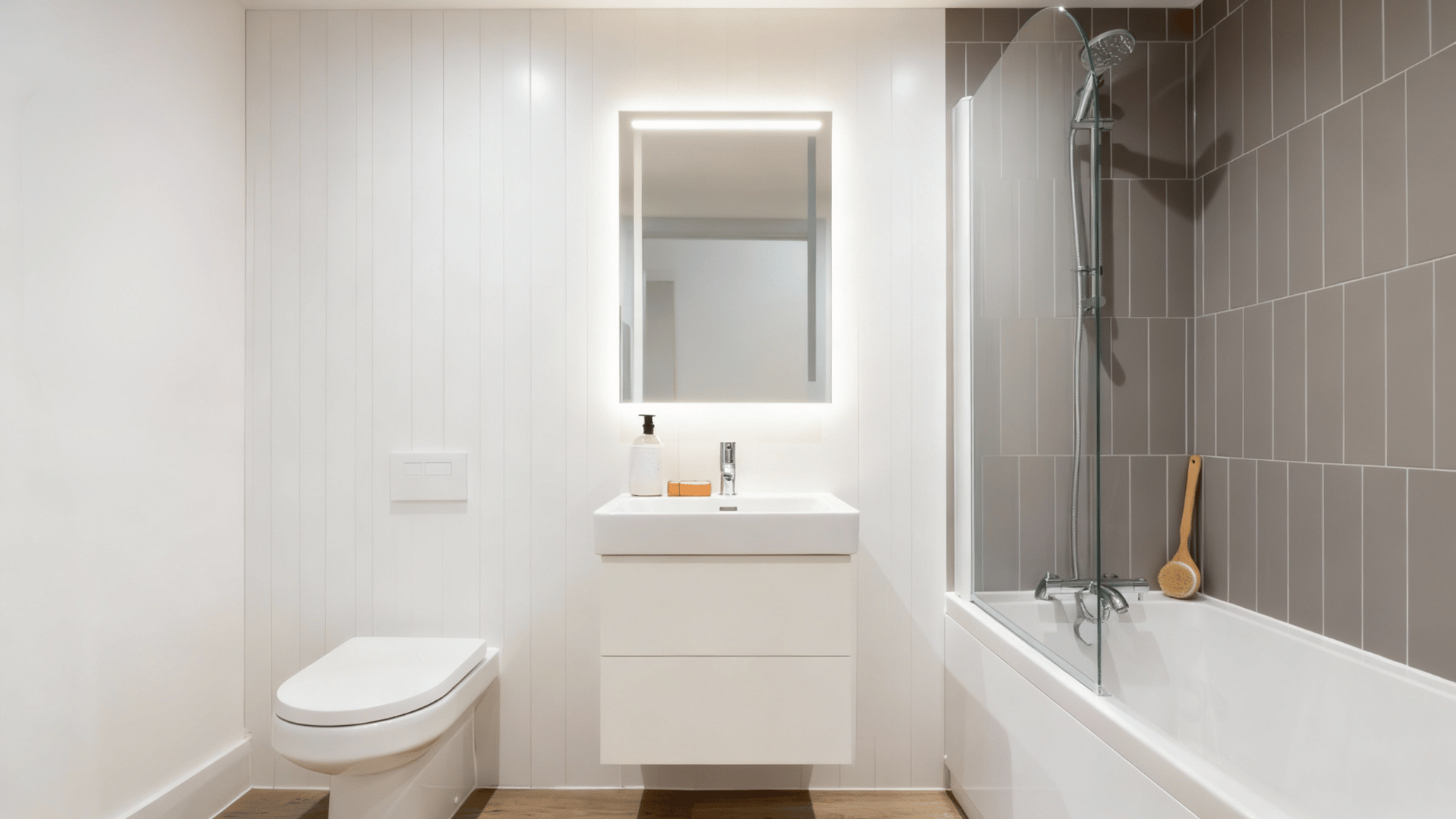
Smart strategies like retaining existing layouts, choosing mid-range products, and timing purchases strategically can dramatically reduce renovation expenses without sacrificing quality.
- Keep layout: Avoid moving plumbing fixtures to different locations, which adds thousands in pipe relocation expenses.
- Refinish existing: Reglazing tubs and refinishing cabinets costs significantly less than complete replacements, while updating the appearance.
- DIY preparation: Handle demolition, painting, and cleanup yourself to reduce labor charges from professional contractors substantially.
- Shop sales: Purchase tiles, fixtures during holiday sales or clearance events for thirty to fifty percent savings.
- Standard sizes: Choose stock vanities and prefabricated shower units rather than custom-built options that triple the cost.
- Phased approach: Complete renovations in stages over time, spreading expenses across months rather than one large payment.
Conclusion
Understanding average bathroom remodel cost helps you plan renovations that match your budget while achieving the results you want.
The bathroom remodeling cost estimator accounts for room size, material quality, labor rates, and regional differences that significantly impact final expenses.
Small updates cost less but deliver noticeable improvements, while complete renovations change spaces entirely at higher price points.
Ready to change your outdated bathroom into a beautiful, functional space? Start gathering quotes today and take the first step toward the bathroom you deserve.