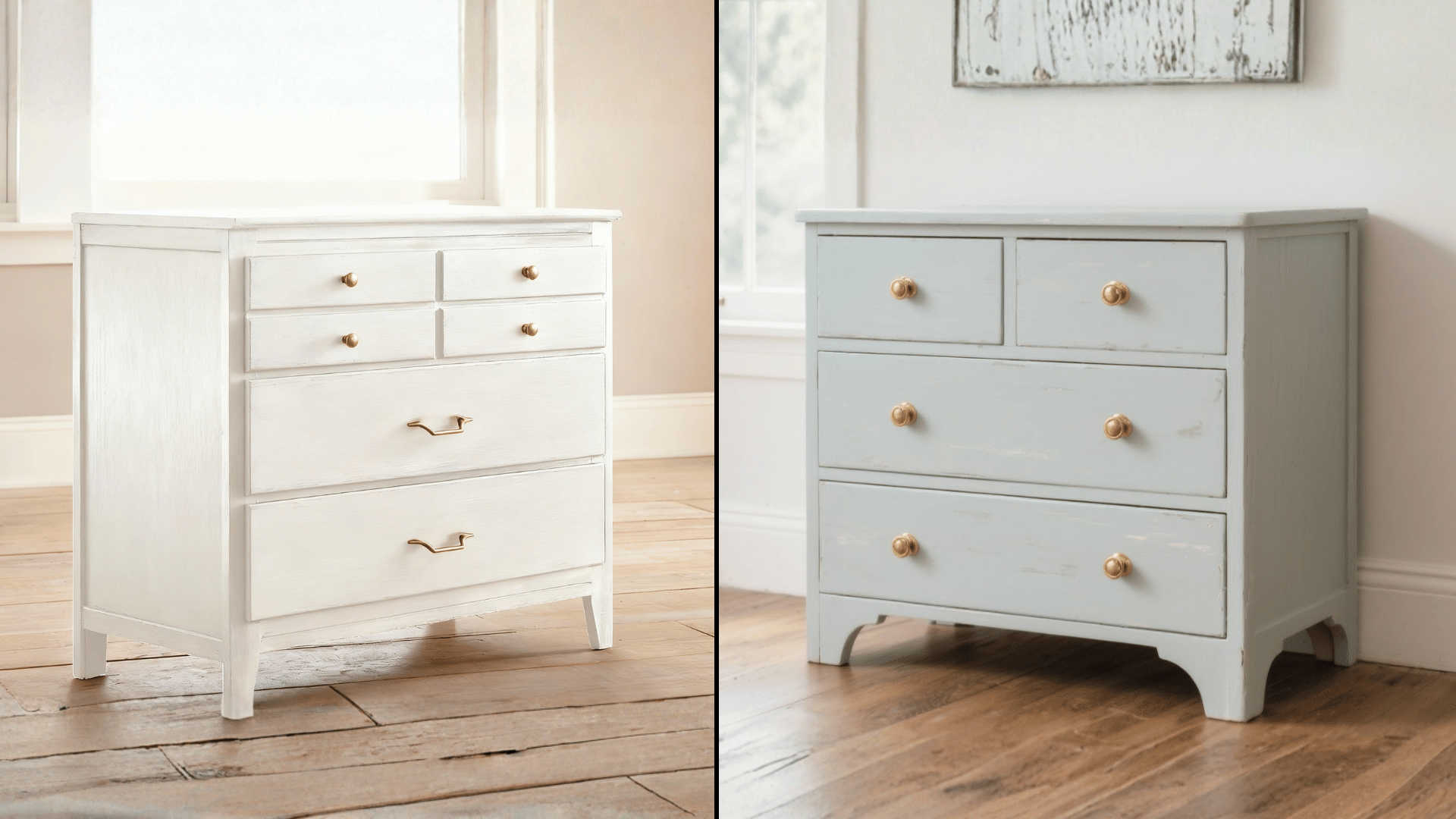
Confused about which decorative paint finish works best for your furniture makeover or home project?
Understanding the key differences in milk paint vs chalk paint helps you select the right product for your specific needs and desired style.
Both paints create beautiful matte finishes loved by DIY enthusiasts and professional furniture refinishers alike.
These specialty paints have gained popularity for changing old furniture into beautiful statement pieces without extensive prep work.
Let’s find out what makes these paints special and how to choose between them confidently for your next creative endeavor.
What is Milk Paint?
Milk paint is an ancient paint formula dating back thousands of years, made from natural ingredients including milk protein, lime, clay, and earth pigments.
This eco-friendly paint comes in powder form that you mix with water before application, allowing you to control consistency and coverage.
The milk protein, called casein, acts as a natural binder holding the pigments together once the paint dries on surfaces.
Milk paint creates a unique, chalky, matte finish that often develops a beautiful aged or chippy appearance naturally over time.
Pros and Cons of Milk Paint

Milk paint offers unique characteristics that appeal to some while presenting challenges for others in their projects.
| Pros | Cons |
|---|---|
| All-natural, non-toxic ingredients are safe for indoor use. | Requires mixing powder with water before each use |
| Creates an authentic chippy, distressed finish naturally over time. | May not adhere well to previously painted surfaces |
| Penetrates raw wood deeply, forming a permanent chemical bond. | Limited color selection compared to modern paint options |
| Extremely durable finish once fully cured and sealed. | Drying time varies based on humidity and temperature |
| Eco-friendly option biodegrades without harming the environment. | Inconsistent results are possible depending on the mixing ratios used |
What is Chalk Paint?
Chalk paint is a modern decorative paint invented in the 1990s, featuring a thick, creamy consistency and ultra-matte finish without priming.
This water-based paint contains calcium carbonate, giving it the chalky appearance and texture that inspired its name.
Unlike milk paint, chalk paint comes ready to use straight from the can, with no mixing or preparation required.
The thick consistency allows excellent coverage, often requiring just one or two coats for complete opacity on most surfaces.
Pros and Cons of Chalk Paint

Chalk paint offers unique advantages and limitations that homeowners should understand before starting their furniture refinishing projects.
| Pros | Cons |
|---|---|
| No priming or sanding required for most surfaces. | More expensive per project than traditional paint options. |
| Ready to use directly from the can without mixing. | Requires wax or sealer topcoat for durability protection. |
| Adheres to almost any material, including slick surfaces. | Matte finish shows fingerprints and marks more easily. |
| A wide variety of colors is available from multiple brands. | Thick consistency can show brush strokes in the finish. |
| The forgiving application process is ideal for beginners learning painting. | Not truly eco-friendly, despite manufacturers’ marketing claims. |
Difference Between Milk Paint vs Chalk Paint
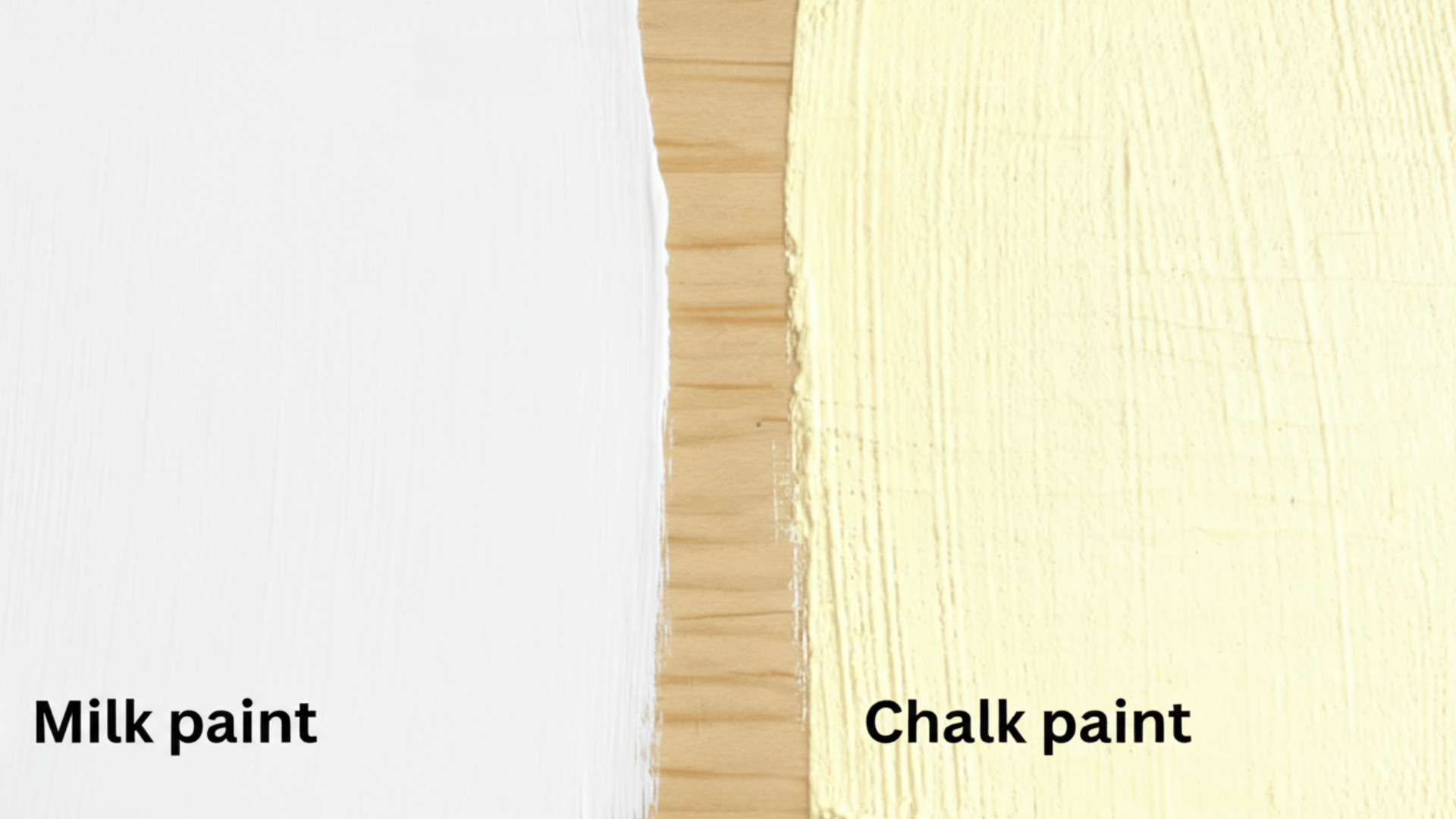
Understanding these finishes helps you choose the right option for your furniture and home projects.
1. Ingredient Composition and Formula
Milk paint contains all-natural ingredients, including milk protein, lime, clay, and earth pigments, creating an eco-friendly, biodegradable formula.
Chalk paint uses synthetic calcium carbonate with acrylic binders and chemical additives, creating a modern, ready-to-use formula.
The milk paint vs chalk paint ingredient differences significantly affect environmental impact, safety, and user preparation time throughout projects.
2. Surface Adhesion and Preparation Requirements
Milk paint bonds permanently to raw, unsealed wood through chemical reaction, but struggles to adhere to previously painted or finished surfaces without bonding agents.
Chalk paint adheres to virtually any surface, including glossy finishes, laminate, metal, and glass, without priming or sanding beforehand.
This fundamental difference in milk paint vs chalk paint adhesion makes chalk paint more versatile, while milk paint excels specifically on bare wood applications.
3. Consistency and Application Method
Milk paint has a thin, watery consistency similar to stain, allowing it to soak into wood pores rather than coating surfaces like traditional paint.
Chalk paint features a thick, creamy consistency, providing excellent coverage in one or two coats, hiding underlying surfaces completely.
The texture difference between milk paint and chalk paint affects brush stroke visibility, coverage speed, and the final appearance of completed furniture pieces.
4. Natural Aging and Distressing Characteristics
Milk paint naturally chips and peels over time, creating authentic aged patina without artificial distressing techniques or additional effort.
Chalk paint maintains a smooth, uniform finish unless intentionally distressed through sanding after drying, revealing underlayers or raw wood beneath.
The aging difference in milk paint vs chalk paint determines even if you prefer controlled, intentional distressing or organic, natural wear patterns.
5. Cost and Availability Factors
Milk paint generally costs less per project since powder concentrate mixes with water, stretching each container across multiple furniture pieces.
Limited specialty retailers and online shops carry authentic milk paint brands, reducing convenience and immediate availability.
Chalk paint costs more per container but offers ready-to-use convenience found at most craft stores, hardware stores, and paint retailers.
Similarities Between Milk Paint vs Chalk Paint
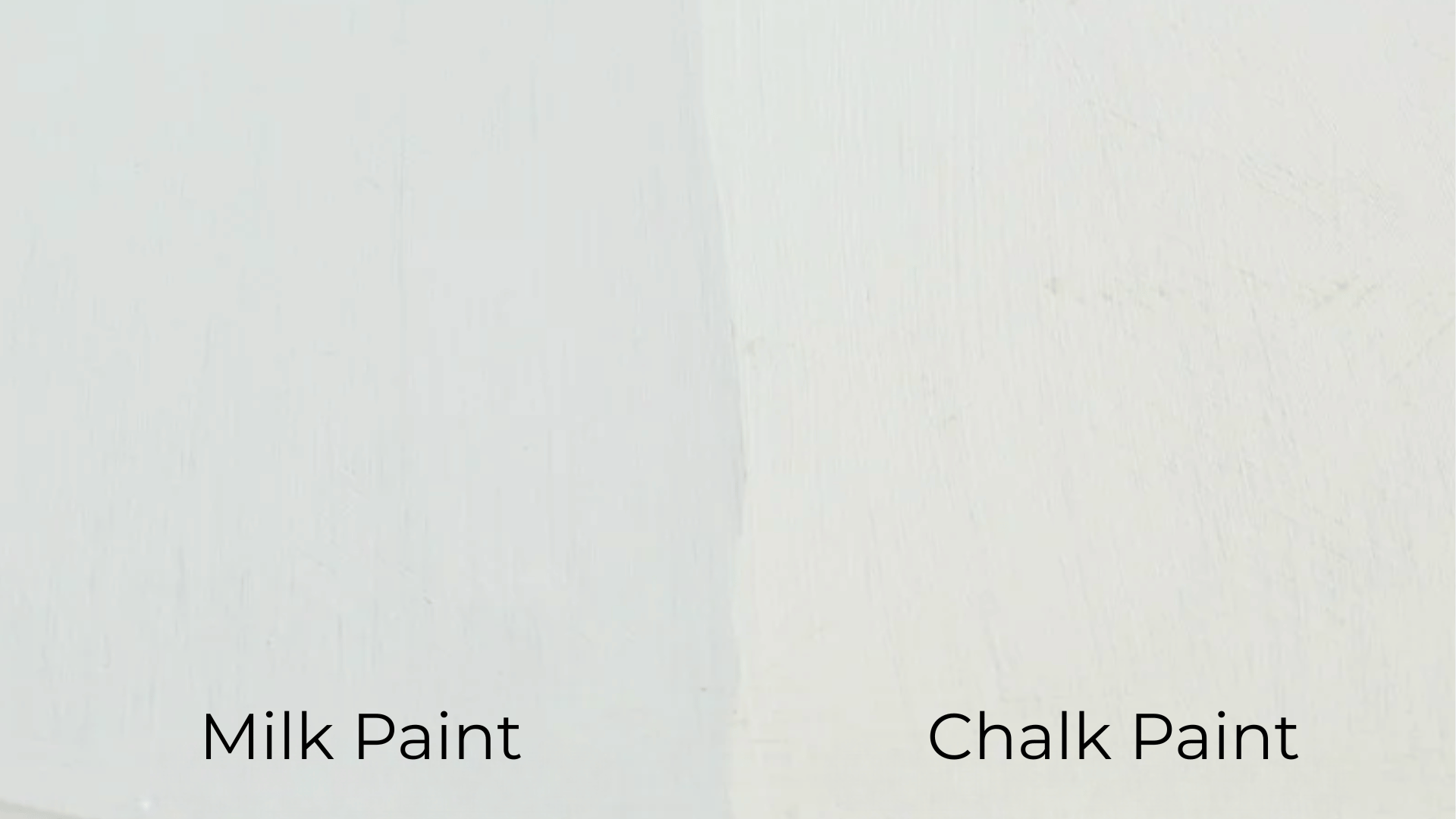
Both paint types offer vintage style and DIY-friendly application, making them popular choices for furniture refinishing projects.
- Matte finish: Both paints dry to flat, non-reflective surfaces, creating similar visual aesthetics on completed projects.
- Minimal prep: Neither paint requires extensive sanding or priming compared to traditional latex or oil-based paints.
- Distressing friendly: Both paints and sand easily, allowing decorative distressing techniques to reveal wood or underlayers beneath topcoats.
- Water-based formulas: Both clean up with soap and water, making brushes and spills easy to manage during painting.
- Furniture transformation: Both paints excel at updating old furniture, creating fresh looks without replacing beloved pieces entirely.
- Sealing recommended: Both benefit from protective topcoats like wax or polyurethane, ensuring durability for high-use furniture surfaces.
Which Paint Should You Choose?
Choosing between milk paint vs chalk paint depends on your project goals, skill level, and desired final appearance for your furniture piece.
Select milk paint when working with raw wood furniture and wanting authentic chippy, aged finishes that develop naturally over time.
Choose chalk paint for convenience, versatility across different materials, and predictable results perfect for beginners or quick projects.
Consider milk paint for eco-conscious projects using all-natural ingredients without synthetic chemicals or additives throughout the formula.
Opt for chalk paint when painting previously finished surfaces, laminate, or materials where milk paint struggles to adhere properly.
Conclusion
Understanding the distinct characteristics of milk paint vs chalk paint empowers you to select the perfect finish for your specific furniture transformation projects.
Both paints offer beautiful matte finishes loved by DIY enthusiasts, though they achieve results through different formulations and application methods.
Your choice ultimately reflects your project priorities, balancing authenticity, convenience, budget, and environmental considerations throughout the decision process.
Select your paint type today and start changing forgotten furniture into beautiful, functional pieces you’ll proudly display for years.